Top Benefits of Battery Energy Storage Systems for Commercial and Industrial Applications
Renewable energy harnessed from solar power offers a sustainable and eco-friendly solution to meet the worlds.
Top Benefits of Battery Energy Storage Systems for Commercial and Industrial Applications
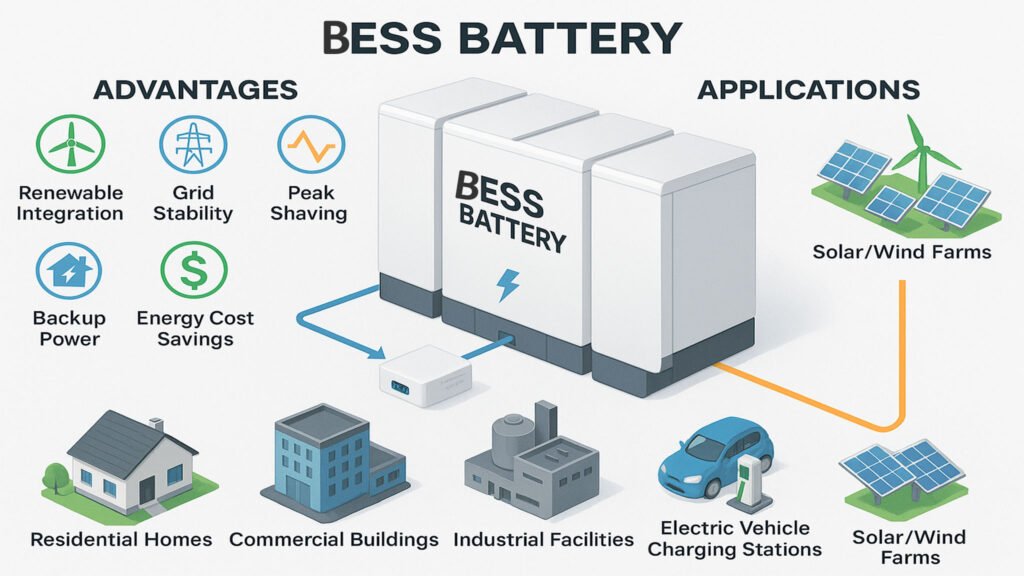
Energy costs continue to rise, while industries and commercial facilities face increasing pressure to improve efficiency, sustainability, and operational reliability. As a result, businesses are actively investing in advanced energy technologies that help optimize power consumption and reduce dependence on traditional energy sources.
One of the most effective solutions available today is a Commercial Battery Energy Storage System (BESS). These systems allow businesses to store electricity, manage energy demand, reduce operating costs, and improve power reliability.
From manufacturing facilities and office complexes to hospitals, data centers, and retail centers, Battery Energy Storage Systems are helping organizations gain greater control over their energy usage while supporting long-term sustainability goals.
What Is a Commercial Battery Energy Storage System?
A Commercial Battery Energy Storage System is designed to store electrical energy and supply power when required. These systems are commonly integrated with utility power, solar energy systems, and backup power infrastructure.
Unlike conventional backup solutions, BESS provides intelligent energy management, helping businesses optimize power consumption and improve operational efficiency.
1. Significant Reduction in Electricity Costs
One of the primary reasons organizations invest in Battery Energy Storage Systems is cost reduction.
Electricity providers often charge higher rates during peak demand periods. A BESS stores energy during off-peak hours and supplies it during peak periods, helping businesses reduce demand charges.
Benefits:
- Lower electricity bills
- Reduced peak demand charges
- Improved energy utilization
- Better return on investment
2. Reliable Backup Power
Power interruptions can result in production losses, operational downtime, and financial damage.
Battery Energy Storage Systems provide instant backup power, ensuring critical equipment and operations remain functional during outages.
Ideal For:
- Manufacturing facilities
- Hospitals
- Data centers
- Telecom networks
- Commercial buildings
3. Peak Shaving and Load Management
Peak demand can significantly increase energy costs.
Battery Energy Storage Systems help reduce peak demand by supplying stored energy during high-consumption periods.
Advantages:
- Reduced grid dependency
- Better load balancing
- Increased energy efficiency
- Lower operational costs
4. Renewable Energy Integration
Many businesses are investing in solar energy systems. However, solar generation is intermittent.
BESS stores excess solar energy and makes it available when solar production decreases.
Benefits:
- Increased solar utilization
- Reduced energy waste
- Greater energy independence
- Improved sustainability performance
5. Enhanced Power Quality
Voltage fluctuations and power disturbances can damage equipment and impact productivity.
Battery Energy Storage Systems improve power quality by stabilizing voltage and supporting frequency regulation.
Outcomes:
- Better equipment protection
- Reduced maintenance costs
- Improved operational reliability
6. Energy Independence
Businesses are increasingly seeking ways to reduce reliance on the utility grid.
Battery Energy Storage Systems provide greater control over energy consumption while improving resilience against grid disruptions.
7. Environmental Sustainability
Organizations pursuing ESG initiatives and sustainability goals can significantly reduce carbon emissions through energy storage.
BESS supports:
- Renewable energy adoption
- Reduced fossil fuel dependency
- Lower carbon footprint
- Net-zero energy initiatives
Industries Benefiting from Commercial Energy Storage
Manufacturing Plants
Improve production reliability and reduce operational costs.
Commercial Complexes
Optimize energy consumption and reduce utility expenses.
Data Centers
Maintain uninterrupted power availability.
Hospitals
Ensure continuous operation of critical medical equipment.
Telecom Infrastructure
Support reliable network operations.
EV Charging Facilities
Manage charging demand efficiently.
Why Choose Rakesol Infratech?
Rakesol Infratech develops advanced Battery Energy Storage Systems designed to help businesses improve energy reliability, reduce costs, and support sustainable growth.
Our solutions combine intelligent monitoring, advanced battery technology, and engineering expertise to deliver long-term performance across commercial and industrial applications.
Frequently Asked Questions
How does a Commercial Battery Energy Storage System reduce electricity costs?
By storing electricity during low-cost periods and using it during peak demand periods.
Can BESS provide backup power?
Yes, Battery Energy Storage Systems provide instant backup power during outages.
Is BESS suitable for manufacturing industries?
Yes, it is widely used to support industrial operations and reduce energy costs.
Can BESS work with solar power systems?
Yes, energy storage systems are commonly integrated with solar installations.
How long does a commercial BESS last?
Most systems have a design life of 10–15 years with thousands of charge cycles.
Conclusion
Commercial Battery Energy Storage Systems are becoming essential for organizations seeking energy reliability, cost optimization, and sustainability. Businesses that invest in energy storage today are better prepared for the future of smart energy management.

Rakesol Infratech